Low-Impact Workouts for PCOS Stress Relief
Low-impact workouts can help manage PCOS symptoms by reducing stress, improving insulin sensitivity, and promoting hormonal balance. Unlike high-intensity exercises, these activities lower cortisol levels and avoid overloading the body, making them ideal for women with PCOS. Key options include:
- Walking: Improves insulin control and heart health.
- Yoga: Reduces stress, enhances cycle regularity, and balances hormones.
- Swimming: Full-body workout that's easy on joints and supports cardiovascular health.
- Pilates: Strengthens the core, lowers inflammation, and reduces stress.
A well-rounded routine includes 150 minutes of moderate activity weekly, blending cardio and strength exercises. Consistency is key - start with 20–30 minutes daily and adjust based on your energy levels. Tracking progress and joining group activities can help maintain motivation.
How Low-Impact Workouts Help Manage PCOS-Related Stress
The Link Between Stress and PCOS Symptoms
Stress and PCOS are closely connected through the body's stress response system, the hypothalamic-pituitary-adrenal (HPA) axis. When stress hits, cortisol levels rise - and for many women with PCOS, cortisol levels are already higher than average. A recent study found that women with PCOS have significantly elevated levels of both cortisol and the androgen DHEA compared to those without the condition [1]. This cortisol increase drives up adrenal androgen production, worsening symptoms like acne, excess hair growth, and hair thinning. On top of that, high cortisol disrupts insulin regulation, which aggravates insulin resistance - a problem that affects up to 70% of women with PCOS [1].
The mental health toll is also significant. Women with PCOS are three times more likely to experience moderate to severe depression and five times more likely to face severe anxiety compared to others [8]. Understanding how stress fuels these symptoms highlights why low-impact exercise can be a powerful tool for breaking this cycle.
The Science Behind Low-Impact Exercise and Cortisol Reduction
Low-impact activities have a unique way of reducing cortisol levels and promoting hormonal balance. Unlike high-intensity workouts, which can temporarily spike cortisol, exercises like walking, yoga, swimming, and Pilates help manage PCOS-related stress without overloading the body [1][7]. These activities release endorphins - your body's natural mood lifters - which can counteract the elevated rates of anxiety and depression often linked to PCOS [1][6].
But the benefits don’t stop there. Low-impact workouts improve insulin sensitivity, which helps lower excess insulin and reduces androgen production. Olivia Tyler, a Personal Trainer and Fitness Manager at Nuffield Health, emphasizes this connection:
"Daily activity is important in glycaemic control and vigorous aerobic exercise can help to also increase insulin sensitivity" [7].
Even a modest routine can make a difference. Research shows that just 30 minutes of exercise, three times a week, can lead to noticeable improvements in both metabolic and reproductive symptoms [6][2]. Practices like yoga and Pilates add an extra layer of benefit by reducing chronic inflammation - a frequent issue in PCOS - and improving autonomic functions like heart rate regulation and digestion [1][6]. The key here isn’t about pushing harder; it’s about staying consistent. By prioritizing low-impact activities, you can help break the stress-symptom cycle that makes PCOS so challenging.
Best Exercise For PCOS (Weight Loss + Low Impact + Hormone Balance)
Top Low-Impact Workouts for PCOS Stress Relief
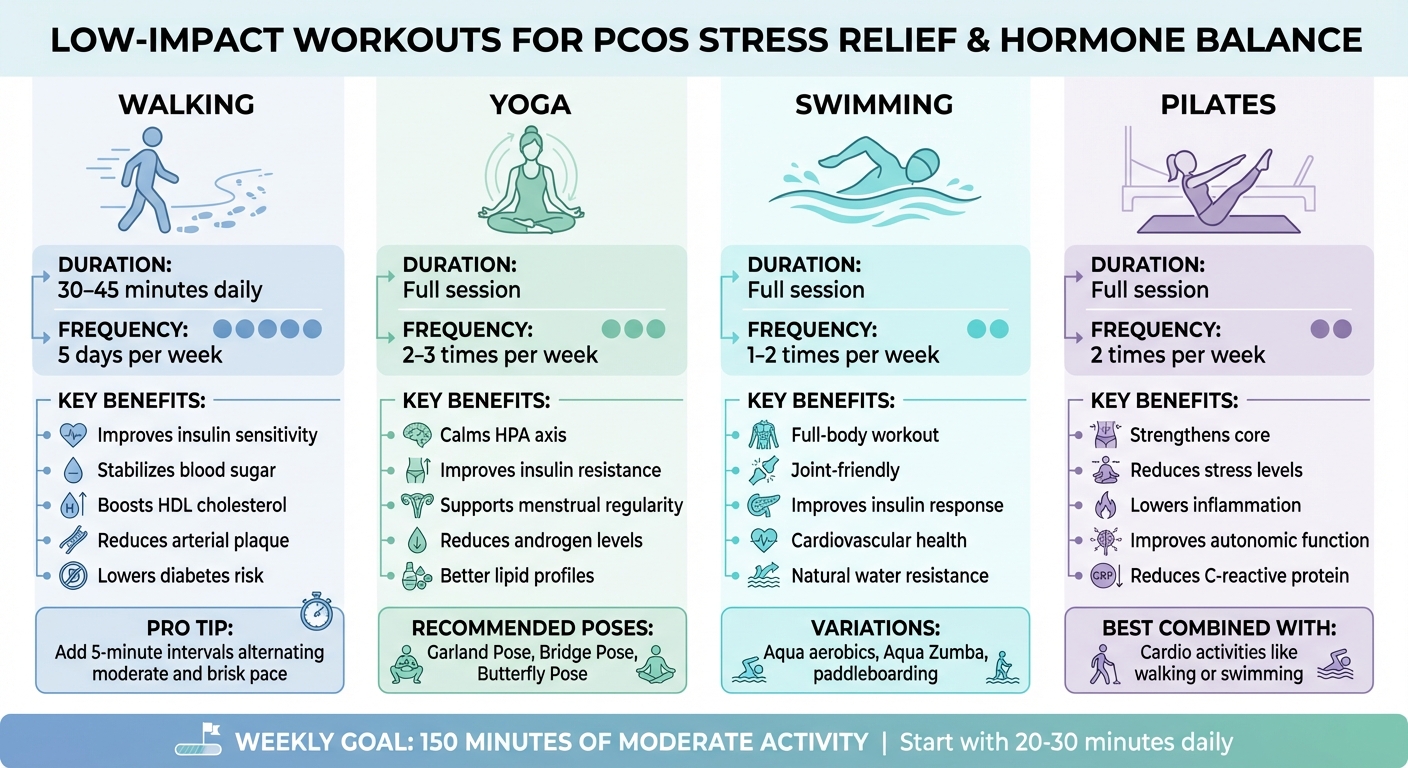
4 Best Low-Impact Workouts for PCOS: Benefits and Weekly Frequency Guide
Low-impact exercises can play a crucial role in managing stress and hormone regulation for those with PCOS. Let’s dive into some effective workout options tailored to these needs.
Walking: A Simple Way to Support Stress and Insulin Control
Walking is more than just a basic activity - it’s a powerful tool for improving insulin sensitivity and stabilizing blood sugar levels [1][2]. It also promotes heart health by boosting HDL (the "good" cholesterol) and reducing arterial plaque buildup, which can lower the risk of type 2 diabetes and cardiovascular disease [6].
Try walking for 30–45 minutes daily at a pace that feels comfortable. If you’d like to enhance the benefits without jumping into high-intensity workouts, consider adding intervals. Alternate between moderate and brisk walking for about five minutes at a time to keep your metabolism engaged.
Yoga: Movement and Mindfulness for Hormonal Health
Yoga is particularly effective in calming the overactive HPA axis often seen in PCOS [1]. Research shows that yoga can outperform traditional exercise in improving insulin resistance, blood sugar levels, and lipid profiles [11]. It also supports menstrual cycle regularity, ovulation, and reduces androgen levels [11].
Certain poses can directly address PCOS symptoms. For instance, Garland Pose (Malasana) may improve pelvic circulation, Bridge Pose (Setu Bandhasana) helps release tension, and Butterfly Pose (Supta Baddhakonasana) encourages relaxation [10]. Dr. Monisha Bhanote, a Yoga Medicine instructor, emphasizes the importance of yoga for stress management and self-care:
"These mood disorders may be directly related to biochemical imbalances and exacerbated by stress related to body image and fertility issues, and utilizing a mind-body approach with self-care should be encouraged." [10]
Aim for two to three yoga sessions weekly to help balance hormones and reduce stress.
Swimming: Gentle Cardio with Full-Body Benefits
Swimming offers a low-impact, full-body workout that’s easy on the joints, making it perfect for those with joint discomfort [1][3]. The natural resistance of water provides an effective way to improve insulin response and cardiovascular health without the high-impact strain of activities like running.
If you’re new to swimming, start slow and set achievable goals for distance or speed as you gain confidence. To keep things interesting, try adding aqua aerobics, Aqua Zumba, or even stand-up paddleboarding to your routine. One to two swimming sessions per week can complement your overall low-impact exercise plan.
Pilates: Core Strength and Inflammation Control
Pilates focuses on controlled movements and breathing, which not only strengthens the core but also helps reduce stress levels that can exacerbate PCOS symptoms [2][6]. Additionally, it may improve autonomic function, contributing to better overall health [1][6].
One standout benefit of Pilates is its potential to lower chronic inflammation. A study conducted at Federico II University of Naples found that a three-month structured exercise program significantly reduced inflammatory markers like C-reactive protein and white blood cell counts in women with PCOS, while also improving cardiovascular fitness [9].
Incorporate two Pilates sessions per week and pair them with cardio activities like walking or swimming for a well-rounded approach to improving metabolic health [6][4].
Each of these workouts offers its own set of benefits, and combining them can create a balanced routine to support both stress relief and metabolic wellness.
Designing a Weekly Low-Impact Workout Routine
Low-impact workouts are fantastic for stress relief, but to truly reap the benefits, you need a plan that works with your body's natural rhythms. Experts recommend aiming for at least 150 minutes of moderate aerobic activity per week, which breaks down to about 20–30 minutes a day [3][4][13]. If that feels like a lot, don’t worry - you can split this time into smaller sessions throughout the day and still enjoy the same health perks [3][12].
How to Balance Different Types of Low-Impact Exercises
A balanced routine is key, blending low-impact cardio and resistance training to support both insulin sensitivity and metabolic health [7][4]. Olivia Tyler, Clinical Regional Fitness Lead at Nuffield Health, highlights why variety is crucial:
"Daily activity is important in glycaemic control and vigorous aerobic exercise can help to also increase insulin sensitivity. Adding in some resistance training per week will also help as this increases metabolic activity" [7].
Here’s a simple weekly template to get you started:
- Strength training: 3 days a week, focusing on lighter weights and higher reps (10–20 per set) to avoid hormonal imbalances [7].
- Pilates or yoga: 2 days a week to improve flexibility and calm your nervous system.
- Walking: At least 30 minutes, 5 days a week.
If you want to fine-tune your routine based on your energy levels, consider syncing your workouts with your menstrual cycle. For example:
- Follicular phase (days 6–14): This is when your energy peaks, so prioritize strength training and incline walking.
- Ovulation and luteal phases (days 15–28): Transition to restorative movements like yoga or swimming.
- Menstruation (days 1–5): Focus on rest, gentle stretching, or light walking [5].
This approach not only supports insulin sensitivity but also promotes overall metabolic health. The key is finding a rhythm that works for you and sticking with it.
Tips for Staying Consistent and Motivated
Even the best workout plan won’t work without consistency. Start small - just 20 minutes of daily movement can make a big difference. A brisk walk around your neighborhood, for instance, is a great way to build momentum [13].
Tracking your mood and energy levels in a journal or app can help you figure out which exercises feel most effective for stress relief and when you might need extra rest [13]. Keep an eye out for signs of overtraining, and don’t hesitate to adjust your routine as needed [5][4].
Staying motivated can be tough, but social accountability can help. Join group classes or connect with others who share your goals - especially within the PCOS community. It’s easier to stay on track when you’re not doing it alone [5][13].
Conclusion
Low-impact workouts go beyond simple physical activity - they can play a key role in managing stress and hormonal imbalances tied to PCOS. These exercises can help lower cortisol levels, enhance insulin sensitivity, reduce inflammation, and improve mood, tackling some of the core challenges of PCOS.
An estimated 70% of women with PCOS experience insulin resistance [1][11]. Even modest weight loss - just 5% to 10% of body weight - through regular, low-impact exercise can lead to noticeable improvements in ovulation and metabolic health [5][11]. And it doesn’t take hours at the gym to see results. Something as simple as a 10-minute walk can make a meaningful difference [11]. As Rachel Nall, MSN, CRNA, explains:
"The best exercise is what you will do regularly. Bonus points if the exercise can be something you enjoy doing" [2].
This approach is all about sustainability. It’s about weaving science-backed strategies into your everyday life in a way that feels manageable and rewarding.
Start small - whether it’s a 20-minute yoga session, a swim at the local pool, or a brisk walk around your block. The most important part is finding activities you enjoy and sticking with them. Pay attention to how your mood and energy shift over time, and adjust your routine as needed - especially during hectic periods or when your body signals the need for extra rest.
FAQs
How does stress impact PCOS symptoms?
Stress plays a major role in amplifying PCOS symptoms, creating a tough cycle where stress worsens the condition, and the symptoms themselves heighten stress. When stress levels rise, the body produces more cortisol, a hormone that can interfere with insulin regulation. This disruption often worsens insulin resistance, a core issue for many with PCOS. The result? Increased abdominal weight gain and an aggravation of symptoms like irregular menstrual cycles, acne, and excessive hair growth.
On top of the physical challenges, managing PCOS can take an emotional toll. Concerns about fertility or body image can add to the stress, further fueling the cycle. To counter this, incorporating low-impact activities like yoga, walking, or swimming can be incredibly beneficial. These gentle exercises not only help lower cortisol but also promote overall well-being, making them a practical and supportive way to ease PCOS symptoms.
How can low-impact workouts help manage PCOS symptoms?
Low-impact workouts can be a great way to manage PCOS symptoms. They help lower stress levels, decrease cortisol, and improve insulin sensitivity - all without overloading your body. These exercises are especially helpful for those dealing with joint pain, fatigue, or elevated stress.
Gentle activities like walking, yoga, swimming, and Pilates not only support hormone balance but also encourage relaxation and boost overall wellness. They’re beginner-friendly and can be adjusted to match your fitness level and daily routine.
What’s the best way to create a low-impact workout routine for managing PCOS?
To create a workout routine that works well for managing PCOS, focus on exercises that promote hormone balance, reduce stress, and support overall wellness. Start with low-impact cardio activities like walking, swimming, or cycling for about 30 minutes on most days. These exercises can improve circulation and help with insulin sensitivity without putting too much strain on your body.
Include strength-building exercises 2–3 times a week. You can use your own body weight, resistance bands, or light weights to build muscle and boost metabolic health. Adding mind-body practices such as yoga or stretching can be especially helpful for reducing stress and managing cortisol levels, which often play a role in PCOS symptoms.
Pay attention to how your body feels, stay consistent, and adjust your workouts depending on your energy levels. Always check with your healthcare provider before starting a new exercise routine to ensure it’s right for you.
Related Blog Posts