PCOS Burnout vs. Fatigue: Key Differences
Fatigue and burnout in PCOS might feel similar but stem from different causes. Fatigue is physical, linked to hormonal imbalances, insulin resistance, and inflammation. Burnout is mental and emotional, caused by the stress of managing PCOS.
Key Points:
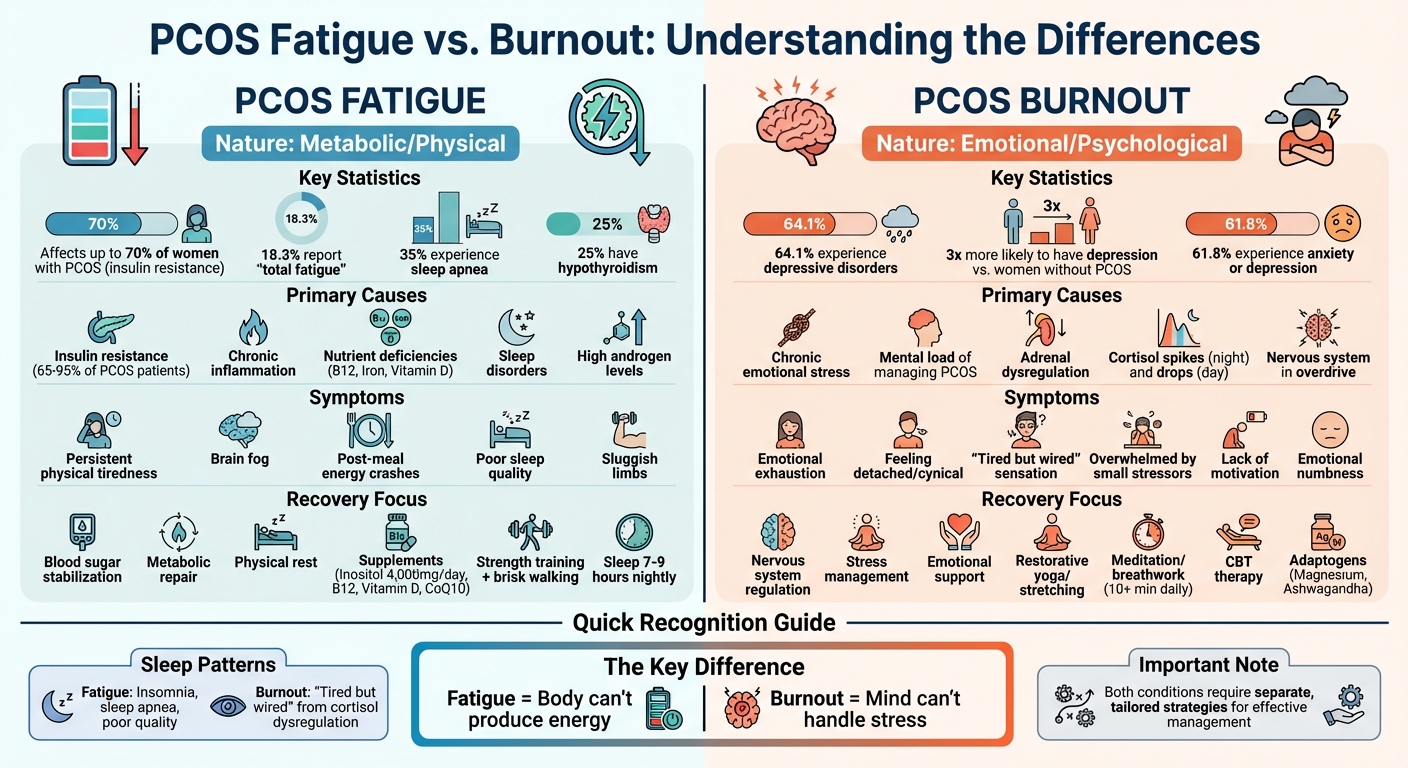
- PCOS Fatigue: Persistent tiredness, brain fog, energy crashes, poor sleep quality. Rooted in metabolic issues like insulin resistance (affects ~70% of women with PCOS), nutrient deficiencies, and chronic inflammation.
- PCOS Burnout: Emotional exhaustion, feeling detached, overwhelmed, and "tired but wired." Driven by chronic stress, disrupted cortisol levels, and the mental load of managing symptoms.
Quick Comparison:
| Feature | PCOS Fatigue | PCOS Burnout |
|---|---|---|
| Cause | Metabolic/hormonal issues | Emotional stress, chronic pressure |
| Symptoms | Physical tiredness, brain fog, crashes | Emotional overwhelm, detachment |
| Sleep Issues | Insomnia, poor quality | "Tired but wired", cortisol spikes |
| Recovery Focus | Blood sugar balance, physical rest | Stress reduction, emotional support |
Addressing these requires separate strategies: stabilize energy systems for fatigue and focus on stress relief for burnout. Both need tailored care to improve well-being.
PCOS Fatigue vs Burnout: Key Differences and Recovery Strategies
What Is PCOS Fatigue?
PCOS fatigue refers to a deep, persistent exhaustion that doesn't improve with rest or sleep. It's not the typical tiredness you feel after a long day - it’s a profound physical and mental drain tied to hormonal and metabolic imbalances. You might clock in a solid eight hours of sleep, yet wake up feeling just as depleted as when you went to bed. This type of fatigue is rooted in internal disruptions that affect energy levels.
One major factor is insulin resistance, which affects up to 70% of women with PCOS. When your cells struggle to process glucose for energy, it sets off a chain reaction. Blood sugar levels spike after meals, only to crash sharply later, leaving you feeling shaky, irritable, and drained [9].
Chronic inflammation is another culprit. It ramps up immune activity, which can further sap your energy reserves [4][11]. High androgen levels might interfere with your natural sleep-wake cycle, while fluctuations in estrogen and progesterone can worsen sleep quality [7]. On top of that, nutrient deficiencies - like low iron from heavy periods or reduced vitamin B12 levels (often linked to Metformin use) - can amplify fatigue [7][9].
This unrelenting tiredness often leads to "brain fog", a kind of mental haze that makes focusing or even finding the right words feel like a struggle. Everyday tasks, like walking the dog or completing a work project, can suddenly seem overwhelming [1][9]. A systematic review even found that 18.3% of women with PCOS report "total fatigue", with severity levels comparable to chronic conditions like rheumatoid arthritis or lupus [12].
What Is PCOS Burnout?
PCOS burnout refers to the emotional and mental exhaustion that comes from dealing with chronic stress on a daily basis [5]. Unlike the physical weariness caused by PCOS fatigue, burnout digs deeper, draining your psychological energy. It stems from constantly managing symptoms, adhering to strict lifestyle routines, and carrying the emotional burden of living with a chronic condition. Essentially, it’s your nervous system crying out for relief. This emotional toll often leads to nighttime cortisol spikes, which disrupt your ability to rest.
One hallmark of burnout is the "tired but wired" feeling [10] [3]. This happens when adrenal dysregulation flips your natural cortisol rhythms upside down - cortisol levels surge at night when they should be low and drop during the day when you need energy the most [10] [3]. This imbalance keeps your body locked in a stressful state, making it hard to transition into restorative rest [5].
On the emotional side, burnout can leave you feeling foggy, irritable, and overly sensitive to stress [5]. You might feel "emotionally raw", where even minor stressors feel overwhelming. Many women describe a sense of detachment or feel like they’re failing at the "full-time job" of managing PCOS [16]. These emotional struggles amplify the challenges of living with PCOS, highlighting the importance of targeted coping strategies. While fatigue reflects physical exhaustion at a cellular level, burnout eats away at mental resilience, showing how PCOS impacts both body and mind. Research reveals that 64.1% of women with PCOS experience depressive disorders, and they are three times more likely to face depressive symptoms compared to women without the condition [15].
"You do not have to prove your strength by staying tired. Your body is not broken, it is communicating. And when you listen, healing begins." – Bloom Health & Wellness [5]
How PCOS Burnout and Fatigue Differ
Both conditions leave you feeling drained, but they stem from very different causes. Fatigue is primarily a metabolic issue. Your cells struggle to turn food into energy due to factors like insulin resistance, thyroid problems, or nutrient deficiencies [17][8]. Burnout, on the other hand, is tied to emotional stress. The constant pressure of managing PCOS can lead to mental exhaustion and a dysregulated nervous system [17][12].
Symptoms Side-by-Side
The symptoms of fatigue and burnout shine a light on how each condition affects you. Fatigue often feels like a physical weight - you might experience sluggish limbs, brain fog, and energy crashes after meals, even if you've had plenty of sleep [10][1]. Burnout, however, hits more emotionally. You may feel detached, cynical, and overwhelmed by small stressors, often paired with that frustrating "wired but tired" sensation.
| Feature | PCOS Fatigue | PCOS Burnout |
|---|---|---|
| Primary Nature | Physiological/Metabolic | Emotional/Psychological |
| Key Symptoms | Fatigue, brain fog, post-meal energy crashes, persistent tiredness [10][1] | Emotional exhaustion, cynicism, lack of motivation, "wired but tired" feeling [10][16] |
| Sleep Pattern | Often linked to sleep apnea or insomnia [3][8] | "Tired but wired" state from cortisol dysregulation [17][3] |
These differences in symptoms reflect the distinct biological and emotional triggers behind each condition.
What Causes Each Condition
When you dig into the causes, the contrasts become even clearer. Fatigue arises from disruptions in the body's energy systems. Insulin resistance - a condition affecting 65% to 95% of women with PCOS - makes it harder for your cells to absorb glucose, leaving you feeling drained [19]. Other culprits include hypothyroidism (impacting about 25% of PCOS patients), iron deficiency from heavy periods, and obstructive sleep apnea, which affects roughly 35% of women with PCOS [3][8]. On top of that, up to 30% of women taking Metformin may develop Vitamin B12 deficiency, adding to their exhaustion [17].
Burnout, on the other hand, stems from relentless emotional stress. The ongoing challenge of managing PCOS creates a mental load that can feel unbearable [17][12]. This chronic stress disrupts your adrenal function, causing cortisol levels to spike at night (when they should be low) and drop during the day (when you need energy) [17][3]. The result? A nervous system stuck in overdrive, making it tough to recover.
"Burn-out is described as a state of physical, emotional, and mental exhaustion... may happen if you are exposed to excessive and prolonged stress." – Dr. Renuka Dangare [17]
Different Recovery Approaches
To recover, you need to address the root cause: focus on metabolic repair for fatigue and stress reduction for burnout.
For fatigue, the goal is to stabilize your energy systems. This includes balancing blood sugar by eating every 3–5 hours with meals made up of half non-starchy vegetables, a quarter protein, and a quarter complex carbs. Supplements like Inositol (4,000mg/day), Vitamin B12, Vitamin D, and CoQ10 can also help [19][2]. Addressing sleep disorders, such as sleep apnea, is equally important. Adding strength training and brisk walking to your routine can further improve insulin sensitivity and boost energy production [19][20].
For burnout, the focus shifts to calming your nervous system and finding emotional support. Swap high-intensity workouts for gentler activities like yoga or slow walking to lower cortisol levels [5]. Simple daily practices like deep breathing or five minutes of stillness can make a difference, as can Cognitive Behavioral Therapy (CBT) to manage anxiety and depression [18]. Shifting your mindset - focusing on how you feel rather than obsessing over calories burned - can also help you create healthier habits [5].
| Feature | PCOS Fatigue | PCOS Burnout |
|---|---|---|
| Recovery Focus | Metabolic repair and physical rest [19][21] | Nervous system regulation and emotional support [18][5] |
| Exercise Type | Strength training and brisk walking [19][20] | Restorative yoga, stretching, and slow Pilates [5] |
| Key Interventions | Blood sugar stabilization and supplements (Inositol, B12, Vitamin D, CoQ10) [19][2] | Stress management, boundary-setting, therapy, and adaptogens (e.g., Magnesium, Ashwagandha) [19][5] |
These tailored approaches emphasize the importance of addressing the unique challenges of each condition.
How They Affect Daily Life and Mental Health
PCOS-related fatigue and burnout can significantly disrupt your daily life, underscoring the importance of finding ways to manage these challenges effectively.
When it comes to physical fatigue, even the simplest tasks can feel like climbing a mountain, thanks to the constant, overwhelming sense of lethargy [1][10]. At work, the cognitive toll - things like brain fog and forgetfulness - can turn straightforward tasks into drawn-out struggles [12]. While fatigue primarily drains your physical energy, burnout takes a heavier toll on your emotional well-being.
Burnout chips away at your emotional strength, making it tough to stick to your PCOS management routine. Even small decisions can feel like monumental hurdles [10]. On top of that, burnout keeps your nervous system in overdrive, leaving you unable to relax or recharge fully [10].
"Fatigue can reduce concentration, impair cognitive function and decrease productivity, all of which are critical for maintaining job performance and career progression." – Aakanksha Bajpai, Department of Physiotherapy, Chhatrapati Shahu Ji Maharaj University [12]
Research shows a strong link between fatigue and mental health issues like depression and anxiety [6][13]. Burnout adds another layer by creating a vicious cycle: stress worsens exhaustion, which further drains your mental energy [10]. Unfortunately, many women face these struggles silently at work due to stigma [12].
The impact doesn't stop at work or mental health - it extends to your social life as well. Fatigue often leads to withdrawing from social activities, canceled plans, and stalled projects [8]. Meanwhile, burnout can leave you feeling emotionally numb or even cynical, making it hard to maintain relationships or enjoy activities you used to love. Acknowledging these effects is a crucial first step toward building a self-care routine that works for you.
How to Address PCOS Burnout and Fatigue
Dealing with PCOS fatigue and burnout means addressing both physical and emotional challenges. Fatigue often stems from metabolic and physical issues, while burnout is more linked to emotional stressors. Tackling these separately can lead to better results.
Reducing Fatigue
Balancing blood sugar is a key step in managing PCOS-related fatigue. The PCOS Plate method provides an easy guideline: fill half your plate with non-starchy vegetables, one-quarter with lean protein, and one-quarter with high-fiber complex carbs. This mix helps prevent energy crashes caused by insulin spikes. Eating every 3–4 hours can also keep glucose levels stable and prevent cortisol surges[9][2].
Good sleep habits are equally important. Aim for 7–9 hours of sleep each night and avoid screens for at least an hour before bed to reduce blue light exposure[1][3][9]. If you're still feeling tired despite proper sleep, ask your doctor about testing for sleep apnea, which affects about 35% of women with PCOS[1][2].
Physical activity can help, but the type of exercise matters. Focus on low-impact aerobic activities like walking or swimming, and add strength training 2–3 times a week. High-intensity interval training (HIIT) might not be ideal, as it can increase cortisol levels and worsen fatigue. Supplements may also play a role - consult your doctor about options like Vitamin B12 (especially if you're on Metformin), Vitamin D, and Magnesium Glycinate, all of which support energy metabolism[9].
"PCOS fatigue is real, and it's not a personal failing. It's a physiological response to hormonal, metabolic, and inflammatory imbalances happening inside the body." – Leila Martyn, Founder, MyOva[10]
Other tips include cutting back on caffeine after 2:00 PM, drinking 8–10 cups of water daily, and getting tested for deficiencies in Vitamin B12, Vitamin D, Iron (Ferritin), and thyroid hormones (TSH, T3, T4)[2][9][6].
While addressing physical energy is crucial, emotional well-being requires its own set of tools.
Reducing Burnout
To combat burnout, swap intense workouts for restorative practices like yoga, meditation, or breathwork - even just 10 minutes a day can help lower cortisol levels[10][2][9].
"I believe that you can't get your PCOS under control unless you learn how to manage stress. Stress causes inflammation and drives insulin resistance." – Kelly, PCOS Advocate, PCOS Living[3]
Set boundaries to reduce stress and seek out PCOS-specific support systems to share the mental load[10][2]. Journaling can also be a helpful way to process repetitive thoughts and break free from stress cycles[3][9]. If anxiety or depression is a concern - conditions that affect up to 61.8% of women with PCOS - exploring Cognitive Behavioral Therapy (CBT) could provide tools for better coping[3][9].
Lastly, find small, meaningful activities that genuinely bring you joy. This isn’t about checking off a self-care task but creating moments that uplift your overall well-being[3]. These combined approaches can make managing PCOS more balanced and manageable.
Conclusion
PCOS fatigue and PCOS burnout might feel alike at first, but they stem from entirely different causes and need distinct approaches for recovery. Fatigue is often tied to physical issues like insulin resistance, nutrient deficiencies, and inflammation - leaving you drained, even after a good night's sleep [14]. Burnout, on the other hand, is more of a mental and emotional response to the ongoing stress of managing PCOS, often making you feel overwhelmed, unmotivated, and mentally exhausted [13].
Understanding whether you're dealing with fatigue, burnout, or both is crucial for finding the right solutions. Fatigue typically improves with steps like stabilizing blood sugar, addressing nutrient imbalances, and improving sleep habits. Burnout, however, responds better to stress management techniques, nervous system support, and mental health care [10]. Mistaking burnout for simple tiredness could lead to choices like intense exercise, which might spike cortisol levels and worsen your symptoms [10].
Recognizing these differences validates your experience. It’s not about being lazy or lacking willpower - it’s your body reacting to real hormonal and metabolic challenges. This clarity opens the door to targeted strategies that can help you feel better.
FAQs
How can I tell if I have PCOS fatigue, burnout, or both?
PCOS fatigue feels like a constant drain on your energy, often tied to hormonal shifts, insulin resistance, or disrupted sleep patterns. Even with plenty of rest, you might still feel completely worn out. On the other hand, burnout arises from ongoing stress, leaving you emotionally depleted, unmotivated, and even cynical.
If your tiredness persists despite resting and you notice common PCOS symptoms like irregular periods, your fatigue might be linked to PCOS. However, if stress is the main culprit behind your exhaustion, it could point to burnout. It’s worth noting that both can overlap, making it important to care for both your physical and emotional well-being.
What labs or tests should I ask my doctor for if I’m always exhausted with PCOS?
If you're feeling drained all the time and have PCOS, it's worth talking to your doctor about hormone testing. Imbalances, such as issues with insulin or your thyroid, could be behind your fatigue. It’s also a good idea to check for vitamin B12 deficiency and iron-deficiency anemia, as both can leave you feeling wiped out. Bring these possibilities up with your healthcare provider so they can recommend tests that align with your symptoms and medical history.
When should I seek mental health support for PCOS burnout?
If you’re dealing with ongoing depression, anxiety, or emotional strain caused by PCOS burnout, it’s important to seek mental health support. This becomes even more crucial if your symptoms are escalating or not getting better despite trying self-care strategies. Reaching out early can make a big difference in improving your overall well-being and daily life.
Related Blog Posts