Soy and PCOS: Benefits and Risks

Soy might help manage PCOS symptoms by improving hormone balance and metabolic health, but it isn't a one-size-fits-all solution. Here's what you need to know:
- Hormonal Effects: Soy isoflavones may lower testosterone, DHEAS, and luteinizing hormone (LH) levels, helping reduce PCOS-related hormone imbalances. However, individual gut microbiota influences soy's effectiveness.
- Metabolic Benefits: Studies show soy can enhance insulin sensitivity, lower cholesterol, and improve cardiovascular markers in women with PCOS.
- Thyroid Concerns: High soy intake might impact thyroid function, especially in those with subclinical hypothyroidism. Adequate iodine intake is essential.
- Product Choice Matters: Opt for organic, non-GMO, minimally processed soy (like tofu, tempeh, or edamame) and avoid heavily processed options (e.g., soy protein isolate).
- Moderation Is Key: Aim for 36–50 mg of soy isoflavones daily, equivalent to about two cups of soy milk or one serving of tempeh, but limit intake to 1–3 servings per week if you have thyroid concerns.
Before adding soy to your diet, consult your healthcare provider to ensure it's a good fit for your PCOS management plan.
How Soy Affects Hormones in PCOS
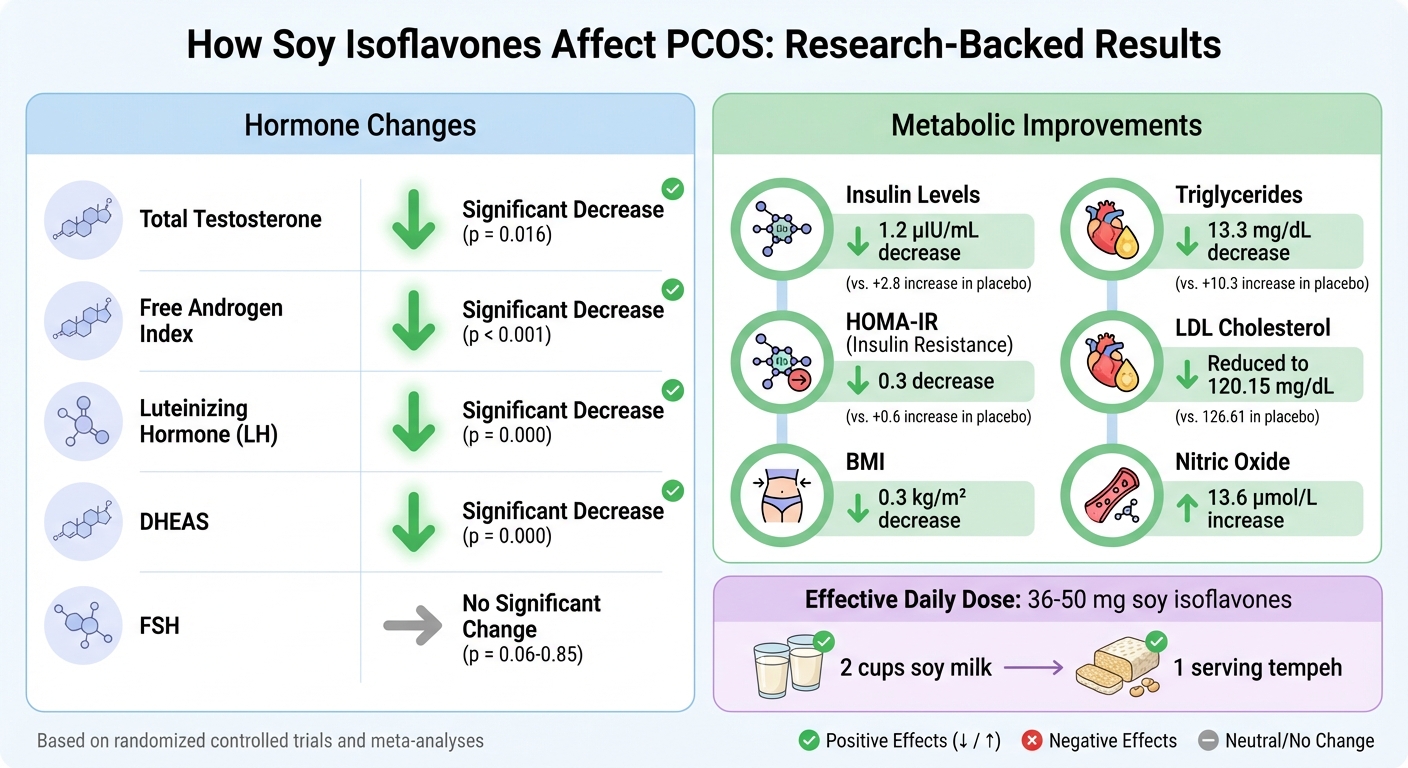
Effects of Soy Isoflavones on PCOS Hormones and Metabolic Markers
Phytoestrogens and Hormone Balance
Soy contains isoflavones, a type of phytoestrogen that shares a structural similarity with 17β-estradiol. These compounds primarily bind to estrogen receptor beta (ERβ), influencing hormone activity in a selective way depending on the hormonal environment, especially in conditions like PCOS. For instance, genistein - a prominent isoflavone - has a much stronger affinity for ERβ compared to ERα, which highlights its potential role in hormone regulation through ERβ activation [1][3].
Another notable benefit of soy isoflavones is their ability to inhibit 5α-reductase, an enzyme that converts testosterone into dihydrotestosterone (DHT), a more potent androgen. This mechanism can be particularly helpful for addressing elevated androgen levels in PCOS. However, it’s important to note that phytoestrogens are significantly weaker than natural estrogen - ranging from 100 to 1,000 times less potent [5]. Additionally, the ability to convert daidzein (another soy isoflavone) into its most active form, equol, depends on gut bacteria, and only about 25% to 50% of people have the necessary microbiota to make this conversion [1].
What Research Shows About Soy and Hormones
Clinical studies suggest that soy may help regulate hormonal imbalances in women with PCOS. One study conducted at Isfahan University of Medical Sciences between December 2009 and February 2010 involved 146 women with PCOS who were given 18 mg of genistein twice daily (36 mg total) for three months. The results showed significant reductions in serum levels of luteinizing hormone (LH), dehydroepiandrosterone sulfate (DHEAS), and testosterone compared to the placebo group [3].
"Genistein consumption may prevent cardiovascular and metabolic disorders in PCOS patients by improving their reproductive hormonal and lipid profiles."
- Behnaz Khani, Assistant Professor, Isfahan University of Medical Sciences [3]
A meta-analysis of randomized controlled trials further supports these findings, showing that soy isoflavones significantly lower total testosterone levels in women with PCOS. The weighted mean difference was -0.14, with a p-value of 0.016 [7]. This reduction in androgens is a critical step in addressing the hormonal imbalances associated with PCOS.
| Hormone/Marker | Effect of Soy Isoflavones | Statistical Significance |
|---|---|---|
| Total Testosterone | Significant decrease | p = 0.016 [7] |
| Free Androgen Index | Significant decrease | p < 0.001 [4] |
| Luteinizing Hormone | Significant decrease | p = 0.000 [3] |
| DHEAS | Significant decrease | p = 0.000 [3] |
| Follicle-Stimulating Hormone (FSH) | No significant change | p = 0.06 to 0.85 [3][7] |
Research indicates that consuming around 36 mg to 50 mg of soy isoflavones daily may help improve reproductive hormone levels and reduce hyperandrogenism in women with PCOS [2][3][4]. With these hormonal effects in mind, the next section explores how soy might also benefit metabolic health in PCOS.
Metabolic Benefits of Soy for PCOS
Improving Insulin Sensitivity
Beyond its role in balancing hormones, soy also supports better metabolic health. A key player here is soy isoflavones - especially genistein - which work by influencing the activity of peroxisome proliferator-activated receptor gamma (PPAR-γ) and boosting the function of glucose transporters like GLUT1 and GLUT4 [1].
Between December 2015 and February 2016, Dr. Zatollah Asemi and his team at Kashan University of Medical Sciences conducted a rigorous study involving 70 women with PCOS, aged 18–40. This randomized, double-blind, placebo-controlled trial split participants into two groups: one received 50 mg of soy isoflavones daily, while the other took a placebo for 12 weeks. The results? Women in the soy group saw their serum insulin levels drop by 1.2 ± 4.0 μIU/mL, while those in the placebo group experienced an increase of 2.8 ± 4.7 μIU/mL. Additionally, the HOMA-IR score - a measure of insulin resistance - fell by 0.3 ± 1.0 in the soy group, compared to a rise of 0.6 ± 1.1 in the placebo group [4][6].
Another clinical trial in 2018, led by M. Karamali, explored the effects of soy protein in 60 women with PCOS. Participants followed a diet where 35% of their protein intake came from soy (0.8 g of protein per kg of body weight) over eight weeks. The findings were promising: the soy group showed reductions in BMI (0.3 kg/m²), fasting plasma glucose (0.2 mmol/L), and insulin resistance (0.6 HOMA-IR). They also experienced a boost in nitric oxide levels by 13.6 μmol/L, signaling better vascular function [9]. On top of that, soy intake bolstered antioxidant defenses, increasing glutathione while lowering malondialdehyde levels [4][9]. These metabolic shifts not only improve insulin sensitivity but also lay the groundwork for better cardiovascular health.
Heart Health Benefits
For women with PCOS, the risk of cardiovascular disease and Type 2 diabetes is already elevated, making soy's lipid-lowering properties especially beneficial. In the same 12-week trial led by Dr. Asemi, women taking 50 mg of soy isoflavones daily experienced a reduction in triglycerides by 13.3 ± 62.2 mg/dL, while the placebo group saw an increase of 10.3 ± 24.5 mg/dL [4][6].
Another earlier study, conducted between December 2009 and February 2010 by Behnaz Khani and colleagues at the Isfahan University of Medical Sciences, examined the effects of genistein on 146 women with PCOS. Participants in the treatment group received 18 mg of genistein twice daily (36 mg total) for three months. The results showed a reduction in LDL cholesterol levels to 120.15 ± 10.68 mg/dL, compared to 126.61 ± 14.81 mg/dL in the placebo group. This drop in "bad" cholesterol is a critical step in reducing heart disease risk [3][8].
Potential Risks of Soy for Women with PCOS
Soy can offer benefits for hormonal and metabolic health, but its impact on thyroid function and the quality of soy products consumed requires careful consideration.
Soy and Thyroid Function
Women with PCOS are more likely to experience thyroid disorders, making the connection between soy consumption and thyroid health an important area to monitor. A randomized, double-blind controlled trial found that a high-soy diet (16 g/day) caused 10% of participants with subclinical hypothyroidism to develop overt hypothyroidism, whereas none of those on a low-soy diet (around 2 g/day) experienced this progression. On the other hand, a separate study involving women with PCOS taking 36 mg/day of soy isoflavones for six months showed no changes in thyroid function [5].
"The researchers suggest that a high soy diet (16 mg/day or more) may precipitate overt hypothyroidism for female patients with subclinical hypothyroidism and that soy intake should be monitored with caution in this population."
– Angela Grassi, Founder, PCOS Nutrition Center [5]
Adequate iodine intake is crucial, as soy's effects on the thyroid are more pronounced in cases of iodine deficiency. If you have a thyroid condition, it’s wise to monitor your thyroid levels (TSH) regularly and ensure your diet includes sufficient iodine.
Now, let’s examine the role of soy processing in its nutritional value.
GMO and Processed Soy Products
The way soy is processed significantly impacts its health effects. Highly processed soy products - such as soy protein isolate, textured vegetable protein, and hydrogenated soybean oil - are often genetically modified and stripped of nutrients [5]. Consuming these in large amounts may pose health risks.
| Soy Product Type | Examples | Key Differences |
|---|---|---|
| Unprocessed/Traditional | Tofu, tempeh, miso, edamame | High in fiber, vitamins, and minerals; often fermented |
| Highly Processed | Soy protein isolate, soy-based bars, meat alternatives | Often GMO; nutrient-depleted; may contain additives |
"There is evidence of processed soy foods like soy protein isolate being harmful to health in high amounts."
– Angela Grassi, MS, RDN, LDN, Founder of PCOS Nutrition Center [5]
When selecting soy products, it’s important to read ingredient labels closely. Avoid items with "soy protein isolate" or "hydrogenated soybean oil" as primary ingredients. Instead, choose non-GMO, traditionally prepared soy options like tofu, tempeh, and edamame to get the most nutritional benefits while reducing potential risks.
How to Choose the Best Soy Products for PCOS
Incorporating soy into a PCOS-friendly diet can be beneficial, but selecting the right products is key. The right choices can enhance hormonal balance and metabolic health while reducing potential risks.
Best Soy Options
Fermented soy products like tempeh, miso, natto, and tamari are excellent options. These not only aid digestion but also support gut health and improve nutrient absorption [10][5].
"Fermented soy products have the most scientific credibility in terms of their health benefits."
– Kym Campbell, Nutritionist [10]
If you're considering non-fermented soy, stick to whole-food options. Examples include edamame (steamed soybeans), organic tofu made with minimal ingredients (just soybeans, water, and a coagulant), and soy nuts. These retain their natural fiber, vitamins, and minerals, making them a healthier choice [5][11].
When shopping, opt for organic, non-GMO soy products. Over 90% of soybeans grown in the U.S. are genetically modified and treated with glyphosate, a chemical linked to endocrine disruption [11][10]. Look for labels like Certified Organic or Non-GMO Project Verified to ensure you're choosing safe options.
On the flip side, steer clear of heavily processed soy ingredients like "soy protein isolate", "textured vegetable protein", or "hydrogenated soybean oil." These are often found in soy-based meat substitutes, protein powders, and energy bars. Such products lose much of soy's natural nutritional value during processing [5][11].
Serving Sizes and Moderation
Even with the right soy products, moderation is crucial. Aim for 1–3 servings of soy per week rather than daily consumption [5][11]. Research suggests that women with PCOS benefit most from 36 to 50 mg of soy isoflavones per day, which is roughly equivalent to two cups of soy milk or one serving of tempeh [5][2].
"Consuming moderate amounts (a few servings a week) of traditionally prepared, unprocessed soy in non-GMO form may offer health benefits to women with PCOS who do not have thyroid disorders."
– Angela Grassi, MS, RDN, LDN, Founder of PCOS Nutrition Center [5]
If you have thyroid issues, it's best to limit soy intake and diversify your protein sources. Include options like fish, eggs, legumes, and nuts to maintain a balanced diet. For thyroid health, consult your healthcare provider to determine the right soy intake for your needs. Pairing soy with other proteins ensures you're meeting your nutritional goals while minimizing risks.
Conclusion
Soy can play a helpful role in managing PCOS by improving insulin sensitivity, reducing androgen levels, and supporting cardiovascular health through lower LDL cholesterol and triglycerides. These benefits may also help alleviate PCOS-related symptoms, such as acne and metabolic challenges.
However, soy's effects aren't one-size-fits-all. Factors like gut microbiota and thyroid health can influence how individuals respond to soy. Some women might experience digestive discomfort, while those with thyroid issues should approach soy with caution [3].
"Our findings indicate consuming soy isoflavone regularly may help women with PCOS improve their metabolic and cardiovascular health."
– Zatollah Asemi, PhD, Kashan University of Medical Sciences [2]
To make the most of soy's potential benefits, consider incorporating whole, fermented, and organic soy products into your diet in moderation. Aim for a daily intake of 36–50 mg of isoflavones to strike a balance between benefits and risks.
Before making any significant changes to your diet, especially if you're thinking about soy supplements, consult your healthcare provider. They can guide you on the right amount for your individual needs, monitor your hormone levels, and ensure soy fits safely into your overall PCOS management plan. A personalized approach is key to addressing your unique health profile.
FAQs
Can soy impact hormone levels in women with PCOS?
Soy might play a role in influencing hormone levels for women with PCOS by potentially lowering testosterone levels and supporting a more balanced hormonal state. Compounds in soy, such as isoflavones, act similarly to estrogen in the body and could help manage some hormone-related symptoms.
That said, not everyone responds to soy in the same way. If you're thinking about incorporating soy into your diet, it’s wise to pay attention to how your body reacts and discuss it with a healthcare provider to ensure it fits into your overall health goals.
Can soy consumption affect thyroid health in women with PCOS?
Soy contains phytoestrogens - plant-based compounds that act similarly to estrogen in the body. For women dealing with thyroid issues, particularly those with PCOS, consuming large amounts of soy could potentially impact thyroid hormone production and function. This might increase the likelihood of developing hypothyroidism, especially for individuals who already have thyroid-related conditions. If you're concerned about how soy might affect your thyroid health, it’s a good idea to consult with a healthcare provider to tailor your diet to your specific needs.
What are the healthiest soy products for women with PCOS?
For women managing PCOS, some of the best soy choices include minimally processed options like soy milk, edamame, tofu, and fermented soy foods such as miso and tempeh. These foods are rich in isoflavones, plant-based compounds that may help with hormonal balance and support metabolic health.
When selecting soy products, it’s a good idea to go for unsweetened and organic versions whenever available. This helps avoid added sugars and reduces exposure to pesticides. Including these soy-based foods in moderation, as part of a well-rounded diet, can be a practical way to help manage PCOS symptoms.
Related Blog Posts