Top 5 Mistakes in PCOS Workouts
If you have PCOS, your workouts might feel harder than they should. Common mistakes - like overtraining, skipping rest days, or not eating before exercise - can actually make symptoms worse. Here’s what to avoid:
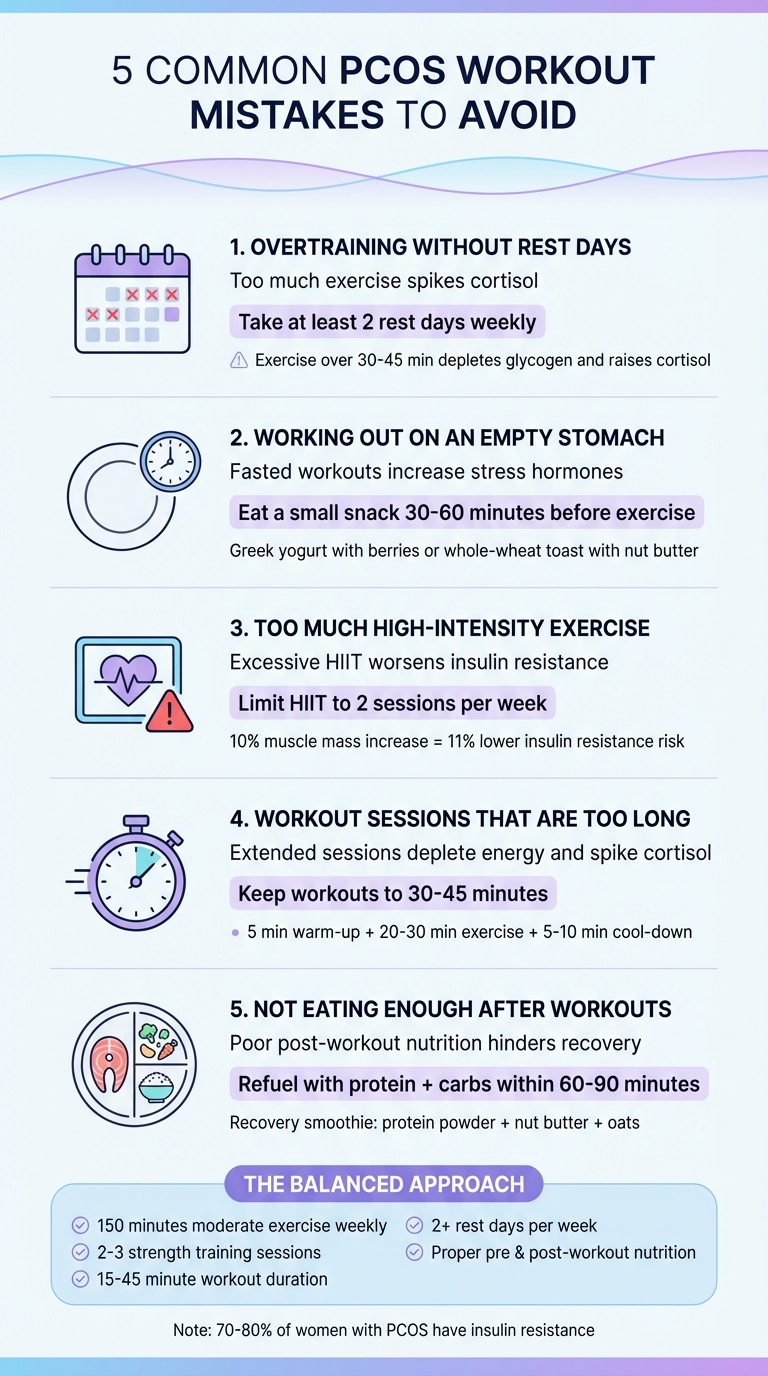
- Overtraining Without Rest Days: Too much exercise can spike cortisol, worsen insulin resistance, and disrupt hormones. Take at least 2 rest days weekly.
- Working Out on an Empty Stomach: Exercising without fuel increases stress hormones. Eat a small snack 30–60 minutes before starting.
- Too Much High-Intensity Exercise: Limit HIIT to 2 sessions a week. Overdoing it raises cortisol and can hurt your progress.
- Workout Sessions That Are Too Long: Keep workouts to 30–45 minutes. Longer sessions deplete energy stores and increase stress hormones.
- Not Eating Enough After Workouts: Refuel with protein and carbs within 60–90 minutes to support recovery and stabilize blood sugar.
A balanced approach is key: focus on moderate exercise, strength training, proper nutrition, and recovery to support your body’s unique needs.
5 Common PCOS Workout Mistakes to Avoid for Better Hormonal Balance
4 PCOS exercise mistakes to avoid (optimize your PCOS workout)
1. Overtraining Without Rest Days
When progress feels slow, it’s easy to think that working out harder and more often is the answer. But for women with PCOS, skipping rest days can actually make symptoms worse. Exercise, while beneficial, is a form of stress on the body. Without proper recovery, your body doesn’t get the chance to repair and rebuild.
The key issue lies in how overtraining impacts your hormones. After about 30–45 minutes of exercise, your glycogen stores begin to deplete, and cortisol levels spike [1]. Cortisol, the stress hormone, starts breaking down muscle tissue for energy. For those with PCOS, this is especially problematic because elevated cortisol can worsen insulin resistance and stimulate your ovaries to produce more testosterone. This hormonal shift can exacerbate symptoms like acne and unwanted hair growth [1][3].
"The body experiences inflammation from the stress of exercise. However, this inflammation is only short-term... But this short-term inflammation can become chronic if you don't allow your body to rest and recover." - Despina Pavlou, Certified Personal Trainer [1]
Overtraining doesn’t just stop at cortisol issues. It can also suppress thyroid function by reducing thyroid-stimulating hormone (TSH) and blocking the conversion of T4 into the active T3 hormone [1]. This can slow your metabolism and even increase the risk of hypothalamic amenorrhea, particularly if your workouts frequently exceed 60 minutes [5][3].
To avoid these pitfalls, make rest days a priority - at least two full days per week [2][4]. Use these days for active recovery activities like gentle walks or restorative yoga instead of intense workouts [2][5]. Be on the lookout for warning signs of overtraining, such as persistent muscle soreness, trouble sleeping despite feeling exhausted, or needing a nap immediately after exercise [1][3]. These signals indicate that your body may need more time to recover.
2. Working Out on an Empty Stomach
Getting enough rest is important, but pairing it with proper nutrition before exercise is just as crucial. Skipping breakfast might seem convenient, but it can disrupt your hormones. After about 8 hours without food - like during sleep - your liver glycogen stores are nearly empty[1]. Without this quick energy source, your body enters a stressed state.
When your body lacks fuel, it turns to gluconeogenesis. This process uses cortisol to break down fat, protein, and even muscle for energy. For women with PCOS - 70% to 80% of whom experience insulin resistance - this can worsen blood sugar issues[1].
"Fasted workouts are a quick way to spike stress hormones like cortisol even further... By not providing the body with glucose/sugar to meet the increase in energetic demands... you are just creating a scenario bound to cause metabolic issues and hormonal havoc." – Despina Pavlou, Certified Personal Trainer[1]
To avoid this, eat something before exercising. A small snack 30–60 minutes before your workout can signal to your body that energy is available. Try something like Greek yogurt with berries or whole-wheat toast with nut butter. These options combine protein with low-glycemic carbs, helping to stabilize blood sugar and prepare your body for activity.
After your workout, refuel with a balanced meal containing both protein and carbohydrates within 60–90 minutes. This helps restore glycogen levels and supports recovery[1].
3. Too Much High-Intensity Exercise
High-Intensity Interval Training (HIIT) has gained a lot of attention for its effectiveness, but doing too much of it can be counterproductive - especially for women with PCOS. While HIIT is great for depleting muscle glycogen and boosting insulin sensitivity, overdoing it can lead to chronic stress. Exercising at 80% of your VO2 max, for instance, causes a significantly higher release of cortisol compared to working out at 40% intensity[1]. Elevated cortisol levels can worsen insulin resistance and stimulate testosterone production, potentially leading to irregular periods, acne, or excess hair growth[7]. Overtraining with HIIT can also slow down your metabolism and lead to muscle loss, which is crucial for improving insulin sensitivity[4]. Striking the right balance is key.
"Limit HIIT workouts to 2 times per week, as excessive high-intensity exercise can increase cortisol levels, which may exacerbate PCOS symptoms." – Dr. Tara Brandner, Family Nurse Practitioner and Fertility Coach[6]
To maintain hormonal balance, it’s essential to tailor your exercise routine. Keep HIIT sessions to twice a week and incorporate strength training 2–3 times weekly. Building muscle is particularly beneficial - research shows that a 10% increase in muscle mass can lower the risk of insulin resistance by 11%[1]. Alongside this, include low-impact cardio activities like brisk walking, swimming, or cycling 3–5 times a week. These exercises support heart health and insulin sensitivity without triggering a significant cortisol response[4]. Limit HIIT sessions to 15–30 minutes and use rest days for restorative activities like yoga or leisurely walks to help manage cortisol levels effectively[1][2].
4. Workout Sessions That Are Too Long
Spending extra time at the gym might feel like you're making progress, but for women with PCOS, extended workout sessions can backfire. Here’s why: your body’s glucose reserves typically last for about 30–45 minutes during exercise. Once you hit the 60-minute mark, those glycogen stores are depleted, leading to a spike in cortisol. This stress hormone starts breaking down fat and muscle for energy, which can undermine your efforts to maintain muscle mass - a key player in improving insulin sensitivity. On top of that, long sessions can interfere with thyroid function, potentially slowing your metabolism[1].
Just like high-intensity workouts, overly long sessions can throw your hormones out of balance.
"After about an hour of exercise, stress hormones like cortisol rise and remain high until you have finished your workout. Cortisol is a catabolic hormone... once your glycogen stores are empty, cortisol must break down stored fat and tissues like muscle and organs to make energy." – Despina Pavlou, Certified Personal Trainer[1]
Studies reveal that women with PCOS who consistently work out for over 60 minutes are more likely to experience anovulation (missed periods)[5][8]. The ideal workout duration? Aim for 30 to 45 minutes. This timeframe is long enough to deliver results without triggering a cortisol surge[1]. A well-structured session might include a 5-minute warm-up, 20–30 minutes of moderate exercise, and a 5–10 minute cool-down[5]. This balance ensures you stay within your body’s optimal energy window while supporting hormonal health.
Pay attention to how your body feels - symptoms like ongoing fatigue or soreness might mean it’s time to scale back. Keeping your workouts within the 30–45 minute range can help protect your hormonal balance and aid recovery.
5. Not Eating Enough and Poor Post-Workout Nutrition
When it comes to managing PCOS, exercise alone isn't enough - what you eat plays a huge role, especially before and after workouts. Skipping meals or not eating enough can backfire, turning exercise into an added stressor for your body. This can lead to higher cortisol levels, muscle loss, and sudden energy dips. The key? Stabilizing your blood sugar with smart eating choices timed around your workouts.
Fueling up before exercise is important. A small snack 30–60 minutes before your workout can give your body the glucose it needs without triggering stress hormones. Opt for something light but effective, like a piece of fruit, whole-wheat toast with a thin spread of peanut butter, or low-fat yogurt topped with blueberries. These options deliver quick-digesting carbs and a touch of protein to keep you energized.
Equally important is what you eat after exercising. Post-workout nutrition is all about recovery. Your glycogen stores get depleted, and your muscles need protein to repair and grow. Eating within 60–90 minutes after your workout can help replenish energy, support muscle repair, and maintain stable blood sugar.
"Eating a balanced meal of protein and carbohydrates after your workout will help with muscle growth and repair. It will help balance blood sugar levels and replenish glycogen stores." – Despina Pavlou, Certified Personal Trainer [1]
If you're not feeling hungry after exercising, a quick recovery smoothie can do the trick. Blend protein powder, nut butter, and oats for a convenient option that covers your nutritional needs. Planning your post-workout snack in advance can also prevent overeating later - a common response when your body feels deprived [2].
Building muscle isn't just about hitting the gym; it's about fueling your body properly. For every 10% increase in muscle mass, there's an 11% reduction in insulin resistance risk [1]. But without the right nutrition, muscle growth simply won't happen.
Conclusion
Managing PCOS is all about finding balance and respecting your body's limits. The five common mistakes we’ve discussed - overtraining, fasting before workouts, overdoing high-intensity or overly long sessions, and neglecting proper nutrition - can elevate cortisol levels and worsen hormonal imbalances. This is especially concerning since around 70% of women with PCOS deal with insulin resistance. Steering clear of these missteps helps protect your hormonal health.
Focus on making small, sustainable changes to your routine. Aim for 150 minutes of moderate exercise per week, include 2–3 strength training sessions to build muscle, keep intense workouts between 15–45 minutes, take at least two rest days per week, and fuel your body with balanced meals before and after exercise. These simple adjustments ensure your fitness routine supports your body’s unique needs.
"Your workout program should nurture you and not punish you. You can't sweat your PCOS away, but a balanced approach to exercise will help you thrive." – Erika Volk, Certified Personal Trainer
Choose workouts that feel right and are sustainable in the long run. Pay attention to how your body responds - if you’re constantly feeling exhausted, battling soreness, or struggling to sleep, it’s probably time to ease up and reassess.
For more tips and resources to help you thrive with PCOS, visit mypcoslife.com.
FAQs
Why is overtraining harmful for women with PCOS?
Overtraining can take a toll on women with PCOS by triggering a spike in cortisol and other stress hormones. This hormonal shift can worsen insulin resistance, throw off hormonal balance, and lead to challenges like fatigue, irregular periods, and intensified symptoms.
The solution? Balance. Focusing on moderate workouts that include proper rest and recovery can go a long way in managing PCOS symptoms while supporting your overall health.
What are the best pre-workout snacks for women with PCOS?
For women managing PCOS, choosing the right pre-workout snack can make a big difference. Combining protein, healthy fats, and low-glycemic carbs helps stabilize blood sugar, curb cravings, and support hormone balance - all crucial for managing symptoms effectively.
Here are a few simple snack ideas:
- Greek yogurt with berries: Packed with protein and fiber, this option provides steady energy without causing a blood sugar spike.
- Boiled eggs with avocado: This protein-and-fat duo helps regulate cortisol and keeps blood sugar levels steady, giving you sustained energy.
- Oats with chia seeds: A great source of slow-digesting carbs, omega-3s, and fiber, promoting better insulin sensitivity.
If you're pressed for time, you can grab something quick 30–60 minutes before your workout. Consider a banana paired with a tablespoon of nut butter or an apple with a slice of cheese. These options provide just the right amount of carbs for energy without overloading on fiber, which can sometimes cause discomfort during intense exercise.
The right snack can help you stay energized, avoid mid-workout slumps, and manage PCOS symptoms more effectively.
How can I manage high-intensity workouts while living with PCOS?
Balancing high-intensity workouts with managing PCOS is all about finding the sweet spot where you reap the benefits without straining your body. Overdoing HIIT (High-Intensity Interval Training) can lead to elevated cortisol levels, worsen insulin resistance, and throw your hormones off balance. To keep things in check, aim for 2–3 HIIT sessions per week and make sure to include recovery days or gentler activities like walking, swimming, or cycling.
For a well-rounded approach, combine HIIT with strength training exercises such as squats, deadlifts, or kettlebell swings. Strength training not only builds lean muscle but also supports better insulin sensitivity and hormone regulation. A balanced weekly routine might look like this: 1–2 HIIT sessions, 2–3 days of strength training, and 1–2 sessions of low-impact or recovery-focused workouts like yoga or stretching. After intense workouts, always take time for a proper cool-down, and avoid exercising on an empty stomach to help keep cortisol levels steady.
Nutrition plays a big role too. Fuel your body with balanced meals or snacks that include protein, healthy fats, and complex carbs before and after workouts. This helps your muscles recover, keeps blood sugar stable, and supports overall recovery. Instead of focusing solely on weight as a measure of progress, consider tracking improvements in energy levels, menstrual cycle regularity, or body measurements to ensure your fitness plan aligns with your PCOS management goals.
Related Blog Posts